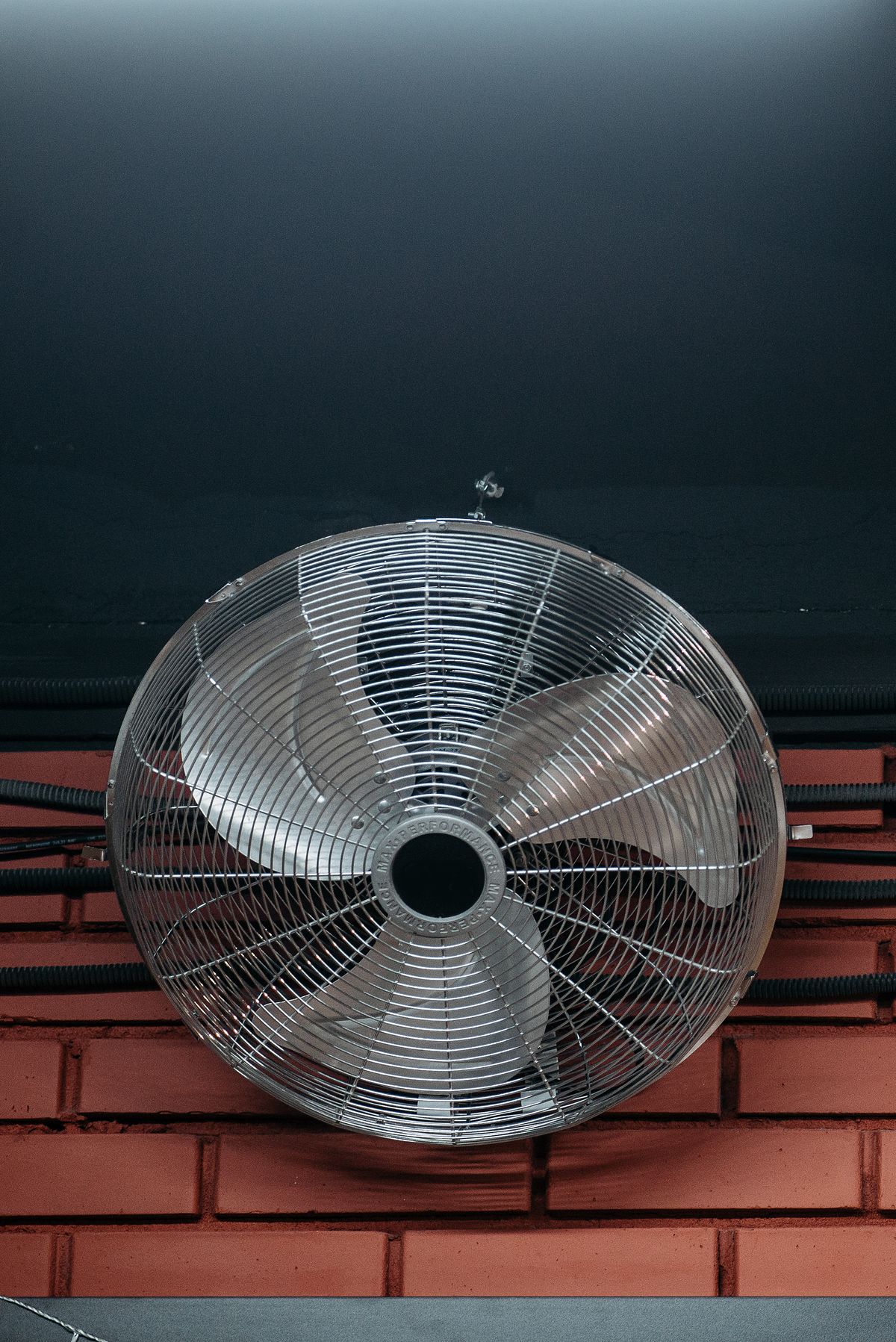
Ceiling fans are one of the most commonly installed fixtures homeowners attempt themselves. They are also one of the most commonly done wrong. The failure modes range from minor annoyances (persistent wobble) to genuine safety concerns (fan mounted to a regular pancake box instead of a fan-rated box). This is a case where the $50-$100 you save on installation isn't worth the risk profile.
The Ceiling Box Problem
This is the most serious issue I see. Standard electrical boxes, the small pancake-style boxes used for light fixtures, are not rated to support the dynamic load of a spinning fan. A ceiling fan exerts outward force as the blades rotate, in addition to its static weight. Over time, a fan mounted to an undersized box will loosen, and in the worst case it can fail and fall.
Fan-rated ceiling boxes are specifically designed for this: they have a higher weight rating (typically 35-70 lbs) and are engineered for the motion loads. If you're replacing a light fixture with a fan, and especially in an older home, the box likely needs to change. This typically requires a short attic or ceiling access job to get to the structure and properly secure a fan-rated brace.
Wobble: What's Actually Causing It
A wobbling fan after installation is extremely common and is almost always one of three things:
- Blade brackets not evenly tightened: each bracket has to be snugged uniformly or one blade will have slightly different pitch.
- One blade warped: not a random occurrence; keep the blades wrapped and flat during storage and installation.
- Balancing: most fans ship with a balancing kit (small clip-on weights). They're cheap and effective. Add them to systematically identify which blade is creating the imbalance.
The wobble can also sit at the mounting point rather than in the blades, at the canopy or the mounting bracket. That's a fastening problem, not a balance problem. The mounting screws need to be into solid backing.
The Hum
Electrical hum from a ceiling fan on dimmer switches is a known issue. Most ceiling fans are not designed to run on standard dimmers. They require either a fan speed control (which is a different device) or a dedicated fan controller. Running a fan on a standard incandescent dimmer can damage the motor over time and almost always produces an audible hum at certain speed settings.
Wiring: The Three Situations
You'll encounter one of three wiring situations: a single switch leg (one switch controls the whole unit), a dual switch leg (one for fan, one for light, which is the ideal setup), or a switched outlet (the box is on an outlet circuit that happens to be switched from the wall). Each requires a different approach for a clean installation, and many DIY installs overlook this, resulting in either the light and fan always running together or control switches that don't function as expected.
When to Call
If you're replacing a fan-for-fan with the same mounting box type, the same wiring setup, and the same switch configuration, DIY is generally manageable. Any of the following is a reason to call: mounting to a new ceiling location without a fan-rated box already in place, two-switch upgrade from single-switch wiring, any signs of wiring that doesn't match the fan's instructions, or a previous installation that's currently wobbling or humming continuously. Happy to handle any of these in Southeast Michigan. This is a half-day project for an experienced installer.
Serving Southeast Michigan homeowners through Iron Oak Contractors with quality craftsmanship and reliable repairs.