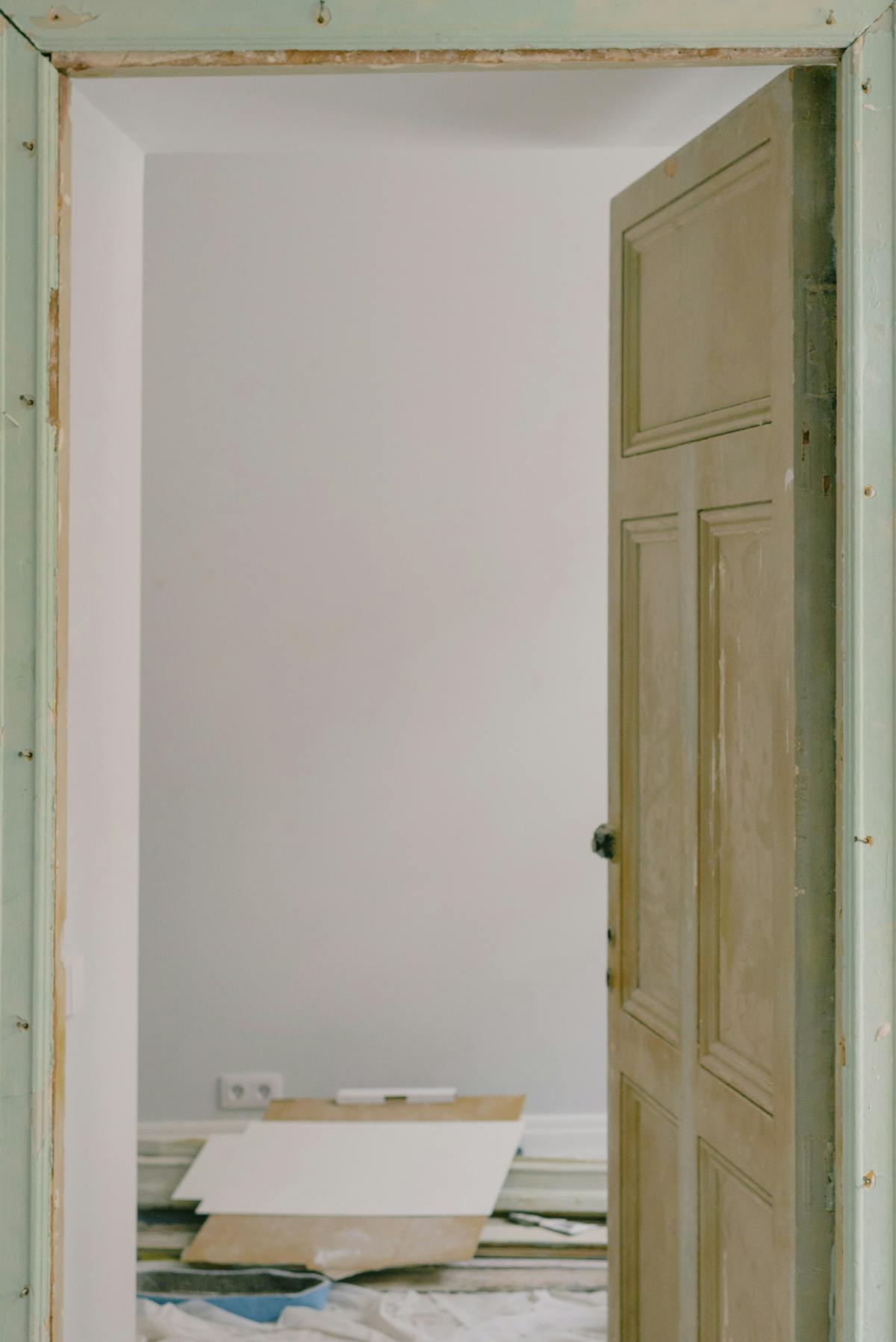
Door frames are one of those things you stop noticing until they're actively giving you trouble. A door that doesn't latch cleanly, a frame that shows light gaps around the edges, a threshold that lets cold air under it in January. These are problems that compound over winter and are always cheaper to address in the fall before freeze-up. Here are the five signs I tell homeowners to watch for.
1. Seasonal Sticking
If a door that works fine in summer starts sticking in fall, it's almost always moisture-related swelling in the door or frame. This isn't just an annoyance. It tells you the door is absorbing moisture it shouldn't be. The typical cause is either a poorly sealed door bottom or edges that haven't been painted/sealed, allowing moisture infiltration. Left unaddressed, this can lead to rot in the jamb over several seasons.
2. Visible Daylight Around the Frame
Stand inside a closed exterior door on a bright day and look around the edges. Any daylight? That's a weatherstripping failure, a frame that's shifted, or a door that's warped. All three cause energy loss. More seriously, all three allow moisture infiltration during driving rain and snow.
3. Door Latch That Misses the Strike Plate
If a door latch that used to click cleanly now drags or misses the strike plate, the frame has moved. This is often foundation settlement, which is normal in Michigan clay soils over decades. Minor misalignment is a straightforward fix. I adjust the strike plate, shim the hinge side, and re-hang the door. If the frame has racked significantly, that's a bigger conversation about whether there's ongoing movement.
4. Paint or Stain Failure at the Threshold
The threshold and the bottom 6-8 inches of exterior door frames take constant abuse. Rain splash, snow tracking, freeze-thaw. When paint or stain peels or turns gray in this zone, the wood isn't far behind. Catching this in fall means a cleanup, re-sealing, and finishing treatment. Missing it means potentially dealing with soft wood or rot by spring.
5. Drafts You Can Feel at Foot Level
Run your hand along the bottom of exterior doors, especially on the hinge side and at the threshold. Cold air infiltration at the base is a combination of failed threshold sweep, compressed weatherstripping, and sometimes a gap that's opened up at the frame-to-floor junction as the house has settled. New door sweeps are an inexpensive fix, but make sure you're not masking a more significant gap with the threshold itself.
What to Do
If you're seeing two or more of these signs, fall is the right time to get them addressed. Door frame repairs in cold weather are harder. Caulking and sealants don't bond as well below 40°F, and working with paint or stain is impractical. I'm available for door frame assessments and repairs throughout Southeast Michigan. Getting this sorted before the cold sets in is almost always the better call.
Serving Southeast Michigan homeowners through Iron Oak Contractors with quality craftsmanship and reliable repairs.